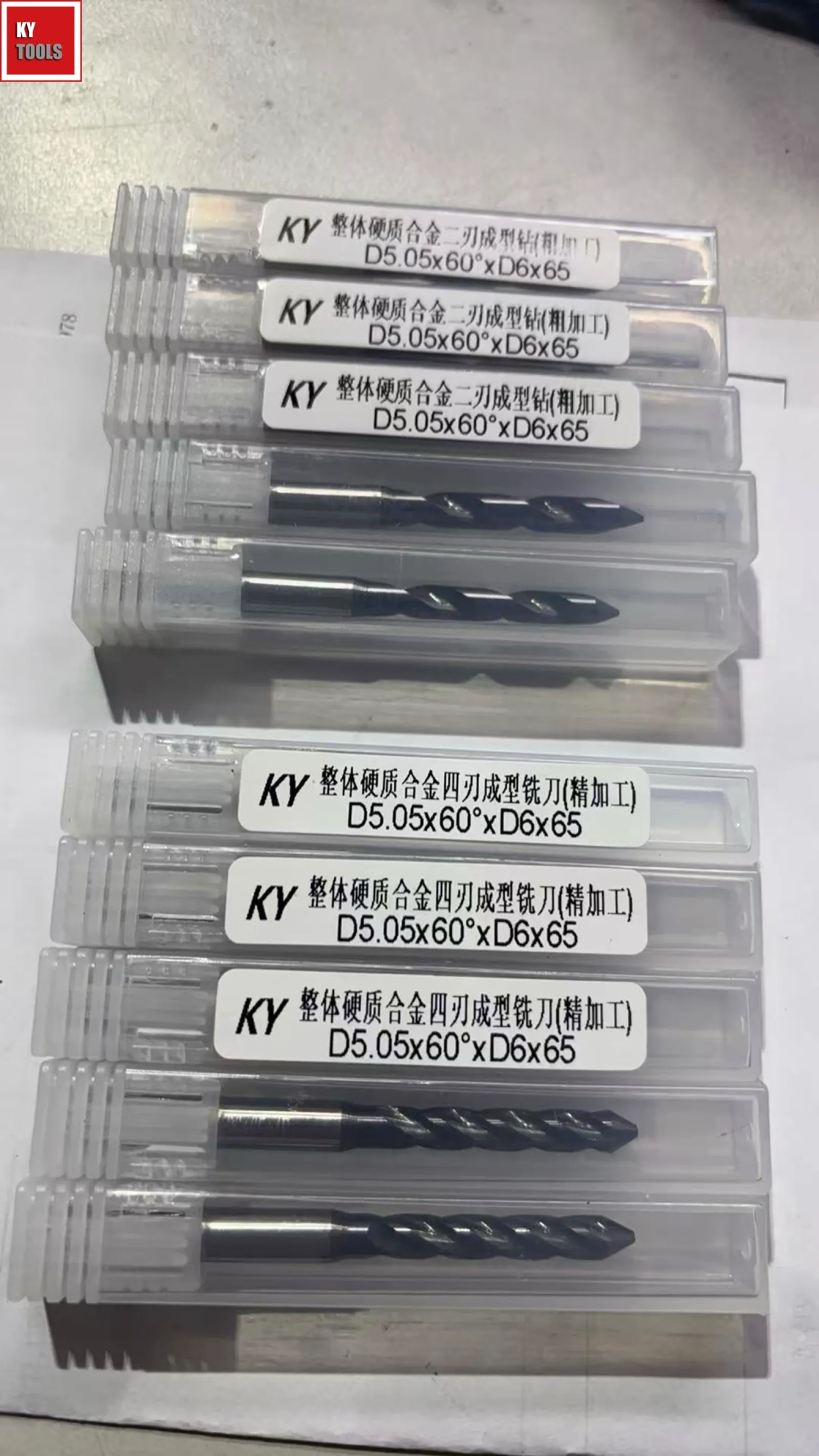
A CNC buyer guide to carbide chamfer tools: common uses, angles, materials, flute choices, coating options and what to include in an RFQ.
A carbide chamfer tool is used to break sharp edges, create bevels, deburr holes, prepare countersinks and improve part handling or assembly. In CNC production, a good chamfer tool reduces secondary deburring and makes edge quality more repeatable.
| Chamfer detail | Typical choice |
|---|---|
| Angle | 60 degree, 90 degree and 120 degree are common, but drawing requirements decide |
| Material | Aluminum, brass, copper, steel, stainless steel and cast iron each need different edge and coating choices |
| Flutes | 2F or 3F for many chamfering and deburring jobs; choose by material and chip evacuation |
| Coating | Uncoated or DLC-style for aluminum, TiAlN/TiSiN-style for steel and harder materials |
Common chamfer tool uses
- Deburring machined edges after drilling, milling or profiling.
- Creating bevels for assembly, safety or cosmetic finish.
- Chamfering holes before tapping, countersinking or part assembly.
- Reducing manual finishing work in repeat CNC production.
Chamfer and custom tool links
End Mills
Start from standard carbide end mill families before requesting chamfer geometry.
Custom Carbide Cutters
Guide to profile, chamfer, form and special carbide cutters for production parts.
Request chamfer tool quote
Send angle, diameter, material, coating and target edge quality for a factory-direct RFQ.
Send your chamfer angle, part material and target edge requirement. We will recommend carbide chamfer tool geometry and coating.
Tags
what is a chamfer tool used forcarbide chamfer end millchamfer cutter for aluminumCNC edge breaking toolcarbide chamfer tool supplier