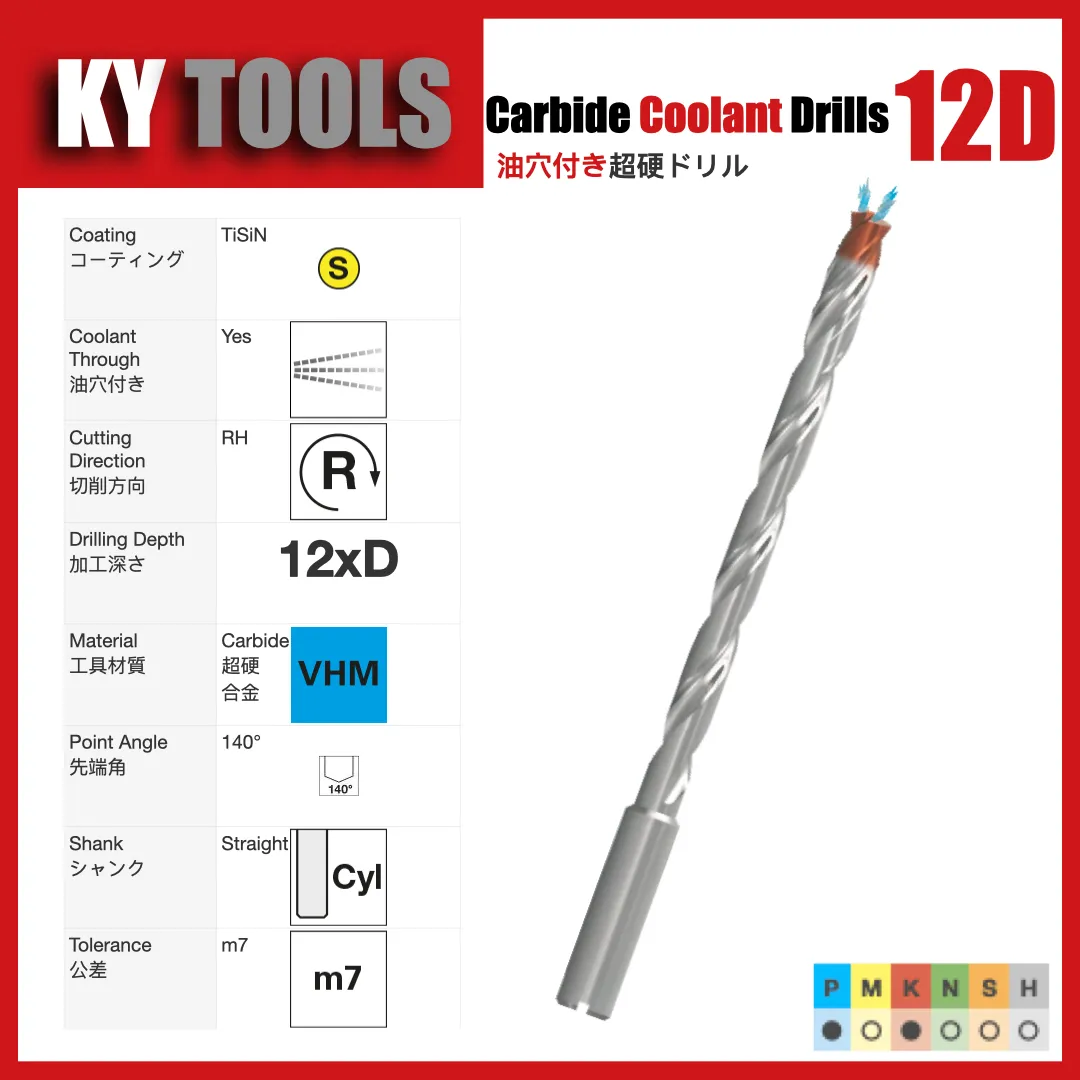
Internal coolant carbide drills deliver coolant through channels inside the tool body, helping control heat, flush chips and stabilize deep-hole CNC drilling.
An internal coolant carbide drill is a solid carbide drill with coolant channels running through the tool body. Instead of relying only on external flood coolant, the drill delivers coolant directly to the cutting edge and into the hole. For CNC shops, this design can improve chip evacuation, heat control, hole stability and tool life, especially when the hole is deep or the work material is difficult to drill.
KYTOOLS coolant drill sourcing pages
Factory-direct internal coolant carbide drills for deep holes, heat control and stable chip evacuation.
Standard solid carbide drills for CNC production holes when internal coolant is not required.
Real KYTOOLS examples of long coolant drills, micro coolant drills and special carbide drilling tools.
How the internal coolant mechanism works
A coolant-through carbide drill usually has one or two internal channels from the shank to the drill point. During machining, coolant enters through the machine spindle or holder, travels through the drill, exits near the cutting lips and pushes chips back along the flutes. This turns coolant from a surface spray into a directed flow at the exact place where heat and chips are created.
- Coolant reaches the cutting edge before heat builds up.
- Chips are flushed out of the hole instead of packing in the flute.
- The drill point runs cooler, reducing edge damage and built-up material.
- Hole size, surface finish and tool life become more repeatable in production.
| Drill type | Best use | Main limitation |
|---|---|---|
| External coolant carbide drill | Shallow holes, stable materials and machines without through-spindle coolant. | Coolant may not reach the drill point in deeper holes. |
| Internal coolant carbide drill | Deep holes, stainless steel, cast iron, titanium and chip evacuation problems. | Requires suitable coolant pressure, filtration and holder setup. |
| Custom internal coolant drill | Step holes, flat-bottom holes, micro holes or long-reach production drilling. | Needs a drawing, material data and process details before quoting. |
Where internal coolant carbide drills are used
Internal coolant drills are chosen when chip removal and heat control decide the result. They are common in automotive parts, hydraulic components, mold bases, aerospace titanium parts, stainless steel fittings, cast iron housings and any CNC process where deep holes must be produced repeatedly.
- 8D, 12D, 15D, 20D and 25D deep-hole drilling.
- Stainless steel drilling where heat and work hardening shorten tool life.
- Cast iron or ductile iron holes where chip dust needs controlled evacuation.
- Titanium and nickel alloy drilling where heat must be removed from the cutting zone.
- Automotive crankshaft, oil-hole and hydraulic passage drilling.
- Custom step drills where coolant delivery helps protect the shoulder transition.
What to check before choosing a coolant-through drill
| Selection point | What to specify | Why it matters |
|---|---|---|
| Depth ratio | 3D, 5D, 8D, 12D, 15D, 20D or 25D | The deeper the hole, the more important flute design, runout and coolant pressure become. |
| Work material | Steel, stainless steel, cast iron, titanium or non-ferrous alloy | Geometry and coating should match the material and chip behavior. |
| Coolant system | Pressure, filtration, holder type and through-spindle availability | Poor coolant delivery can make an internal coolant drill perform like the wrong tool. |
| Hole requirement | Tolerance, surface finish, through hole or blind hole | The drill point and margin design should match the hole quality target. |
| Production target | Trial quantity, monthly use and current tool life | This helps decide whether standard KYTOOLS drills or custom carbide drills are the better fit. |
When KYTOOLS is a good fit
KYTOOLS, available through Solid Carbide Direct, supports factory-direct coolant-through carbide drills for distributors, CNC shops and OEM buyers. The strongest fit is a buyer who needs standard 3D to 25D coolant drills, drawing-based custom drills, small trial quantities, repeatable inspection and fast engineering feedback before larger production orders.
RFQ checklist
- Diameter, flute length, overall length, shank diameter and depth ratio.
- Work material grade and hardness.
- Coolant pressure, filtration and holder or machine spindle details.
- Hole tolerance, finish requirement and whether the hole is through or blind.
- Current failure mode: chip packing, poor tool life, oversized hole, burrs or drill breakage.
- Target trial quantity, annual volume, marking and packaging requirements.
태그